- Creator interviews
- YouTube
- Challenges
Michelle Khare Interview Highlights: Building Challenge Accepted
Michelle Khare on BuzzFeed, building Challenge Accepted around fear, budgets, burnout, sponsors and her Emmy bid, with every quote sourced and dated.

Michelle Khare got famous by turning her fears into a TV-style YouTube show. After producing videos at BuzzFeed, she went independent, and her 2018 video about training like a Victoria’s Secret model for five weeks became the first episode of Challenge Accepted. She told Tim Ferriss in 2026 that “defining something unique can be even more valuable than consistency or mass viewership,” so the show releases only eight to 10 episodes a year.
Michelle Khare’s show looks like a stunt channel. She has trained with the Secret Service, escaped a custom-built version of Harry Houdini’s water torture cell and hung off the side of a military plane as it took off. Listen to her explain it, though, and the real subject is fear. She calls herself an anxious person, builds each episode around something that scares her, and runs the operation like a small TV studio.
This post is for creators weighing fewer, bigger videos, for brands eyeing a show with about 10 sponsor slots a year, and for fans curious how Challenge Accepted gets made. It covers her start, her process, burnout and safety, mistakes, advice, sponsors, her Emmy campaign and her 2026 plans.
Who is Michelle Khare?
Michelle Khare is an American YouTuber, television host and former professional cyclist, born in 1992 in Shreveport, Louisiana, who co-created and hosts Challenge Accepted, a YouTube docuseries in which she trains with experts to attempt some of the world’s toughest stunts and professions.
She studied a self-designed major in digital media and technology at Dartmouth College and won the US U23 criterium national title in 2014, according to Wikipedia. A criterium is a short, fast bike race of many laps around a closed circuit. She raced for the BMW women’s professional team in the 2014–2015 season while working as a video producer at BuzzFeed.
Challenge Accepted premiered in May 2018. She created it with Garrett Kennell, whom she married in 2022 and who directs most episodes as the company’s chief creative officer, The Ankler reported in 2026. The show won Streamy Awards in 2022 and 2023, and TIME named her to its first TIME100 Creators list in 2025.
| Fact | Detail |
|---|---|
| Real name | Michelle Asha Khare, born August 10, 1992, in Shreveport, Louisiana |
| Education | Dartmouth College, self-designed major in digital media and technology |
| Before YouTube | Video producer at BuzzFeed; US U23 criterium national champion (2014); BMW women’s professional cycling team (2014–2015) |
| Known for | Challenge Accepted, a YouTube docuseries co-created with Garrett Kennell, running since May 2018 |
| Television | Host of Karma, an HBO Max children’s competition series released in June 2020 |
| Awards | Streamy Awards for best unscripted series (2022) and Show of the Year (2023); TIME100 Creators (2025); on the Primetime Emmy ballot in 2025 and 2026, without a nomination |
| Business | A production company with seven full-time staff, by her count on The Tim Ferriss Show (2026); a paid fitness app and a long-term Red Bull sponsorship (The Ankler, 2026) |
| Audience | 5.49 million YouTube subscribers and 919 million views as of September 12, 2026, according to Wikipedia |
How did Michelle Khare get started?
Before BuzzFeed she made Helmet Head, a cycling comedy series on YouTube that her younger sister filmed, which she told Dartmouth Alumni Magazine in 2016 “definitely helped me get a job at BuzzFeed.” The job taught her the whole craft.
“At BuzzFeed, you are largely in control of the work that you do, unlike traditional entertainment companies, where the work is divided into directors, producers, writers, actors and editors. I’m responsible for all of that — I come up with the idea, I write it, I shoot it, I edit it and then I get it ready to upload to YouTube.”
— Michelle Khare, Dartmouth Alumni Magazine, March 2016
She later called BuzzFeed “paid graduate school for content creation,” the Los Angeles Times reported, and told Tim Ferriss that without it, “I don’t think I would have succeeded.”
Before quitting, she rehearsed failure. She told Ferriss she worked through the “fear-setting” exercise from his book The 4-Hour Workweek, then quit about a year later with two months of videos finished.
“I moved into a new apartment with a roommate and reduced my rent significantly. I started changing my whole lifestyle so that I would get used to what my budget would be if I was totally failing while I had a full time salary.”
— Michelle Khare, ICYMI newsletter by Lia Haberman, June 2025
The breakthrough came from going long.
“My audience began growing the most when I finally found my unique voice on YouTube in longer-form content. … I allowed myself to be free, emotional, and honest in the storytelling in a way I hadn’t before. The response was incredible — we grew about 100,000 subscribers from that video alone.”
— Michelle Khare, Tubefilter, June 2019
That video, about training like a Victoria’s Secret model for five weeks, became the first episode of Challenge Accepted. Her order of operations is the lesson: learn every job on someone else’s payroll, cut your costs before you jump, and back the format that lands.

Why is Challenge Accepted built around fear?
“Challenge Accepted at its core originally began by me taking a whiteboard and writing all of my fears out and then connecting each fear to a circumstance that would cause me to address it, not just as a personal self-help type of thing, because I am a very anxious person internally, but more specifically because it makes for a better story.”
— Michelle Khare, The Tim Ferriss Show, April 2026
She told Ferriss that showing vulnerability is a key part of screenwriter Blake Snyder’s story beats, a structure in which the hero hits an “all is lost” low before the climax. She told The Ankler in 2026 that she is “probably the most anxious daredevil in the world.”
“Stripped of the emotional component, fear is simply information. It tells us exactly what we need to know in order to progress.”
— Michelle Khare, TED (TEDNext 2025), November 2025
Breath-hold training for the Houdini stunt taught her that: once she stopped fighting the pain, she spotted fixable problems, such as a wetsuit that was too tight. She does these things, she said, “Not because I’m unafraid. But actually because I am.”
For your channel, a fear is a better premise than a stunt: a stunt tells viewers what will happen, while a fear tells them why it matters.
How does Michelle Khare decide what to make next?
“If something works in one piece of content, apply it to the next,” she told Spectrum News 1 in 2023. Early on she made three videos a month she expected to do well plus one passion project, such as training with a stunt double, she told Ferriss; when the passion projects outperformed, the team went all in on Challenge Accepted. Now she also picks ideas that are hard to copy.
“No one would be crazy enough, I don’t think, to run seven marathons on all seven continents in one single week and make a documentary about it … or call the FAA 300 times to get permission to hang off the side of a military plane to recreate the Mission: Impossible stunt.”
— Michelle Khare, The Tim Ferriss Show, April 2026
Scarcity is deliberate. She releases eight to 10 episodes a year, and “every opportunity is a big bet,” she told Ferriss. That cuts against the usual advice to feed recommendations often, which our guide to how the YouTube algorithm works explains.
How does Michelle Khare make a Challenge Accepted episode?
She told Ferriss her editorial calendar runs “anywhere from 12 to 15 months out from idea to upload.”
“For the ‘Houdini’ project, that was three to four months of interviewing various magicians and freedivers to find the right team of people who could bring it to life. It was working with a team of engineers and fabricators to build our own tank. Then it’s six weeks of me training for the stunt. … And then it’s eight to 10 weeks of editing, color grading and professional sound mixing.”
— Michelle Khare, Digiday, June 2025
The Houdini shoot had 80 people on set, she told Digiday, yet her Secret Service episode, with more than 15 million views, used a crew of five. About 45% of her audience watches on a TV, she said. According to The Ankler in June 2026, Khare has said the average video costs around $30,000, while a big production like the Mission: Impossible plane stunt can require a crew of up to 50.
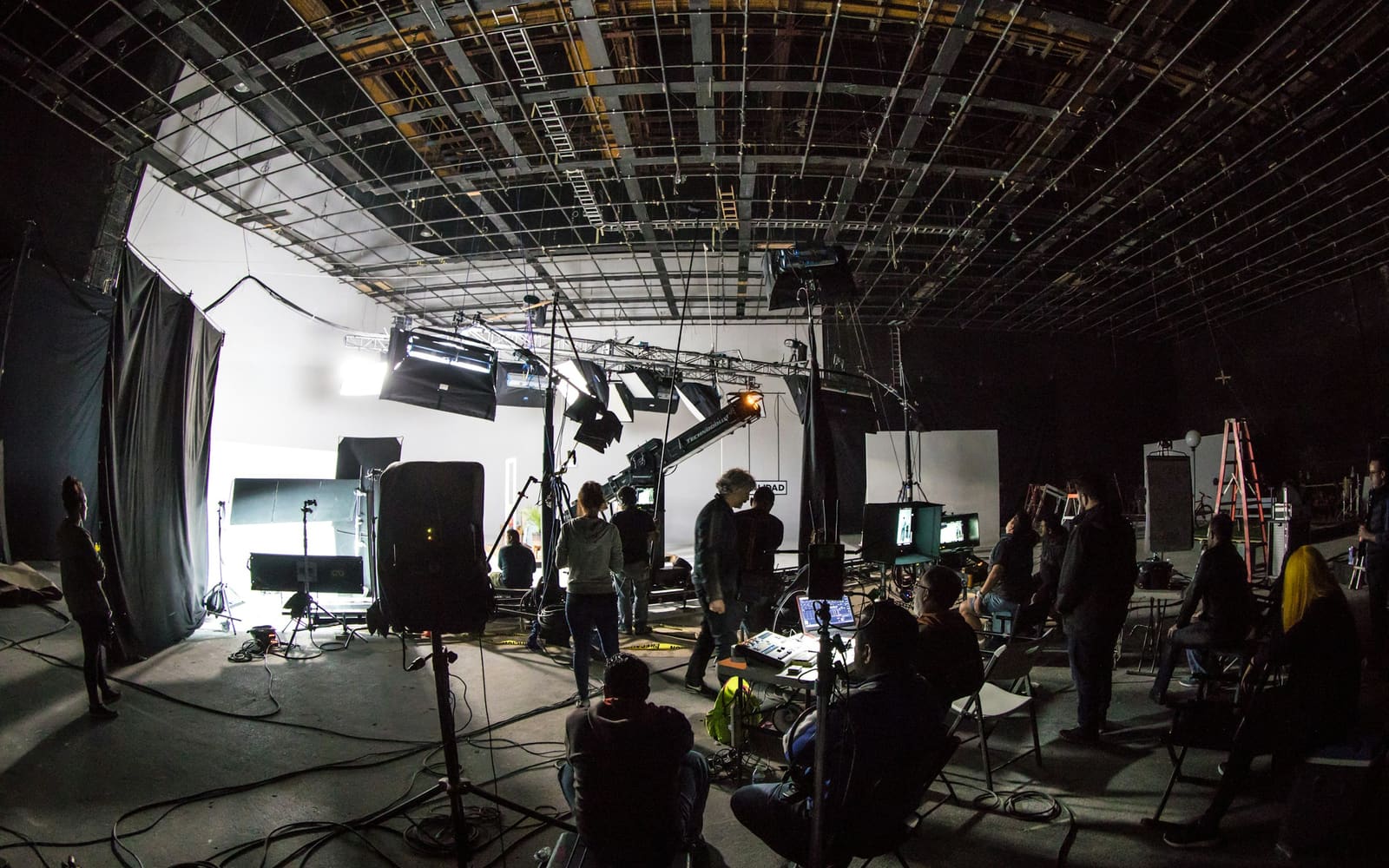
Her full-time team is “intentionally tight,” she told Ferriss: seven people, including Kennell, head of production Nick Hurt and three editors, in what she calls “a slinky operation” that balloons for big projects. For each challenge she looks for “a coach, a mentor, and a cheerleader”: an expert who trains her, someone who has recently done the thing, and a friend detached from the outcome.
On a small budget, copy the shape: a small permanent team, freelancers hired per project and a long runway.
What does Michelle Khare say about burnout and safety?
“I’ve never experienced creator burnout in the way that many of my colleagues have. Many of my colleagues have had a time where they hit the wall and have to take months off entirely. That’s never happened to me because all along the way, it’s been a fast growth, but still slow and steady.”
— Michelle Khare, The Tim Ferriss Show, April 2026
She told Ferriss she was on a plane 73 times the previous year, and that an adviser now has her take at least six hours for herself on trips abroad.
“On set, we had a ‘fear is welcome’ policy. This meant that at any moment, anyone on the crew could raise a concern and it would be addressed in front of the whole group. This strategy allowed us to fine-tune every single detail, from the custom contact lenses I wore to protect my eyes, to the tightness of the harness, to even the FAA approval paperwork.”
— Michelle Khare, TED (TEDNext 2025), November 2025
The risks are real. She suffered a broken nose during a Creator Clash boxing match in 2023, which she won, Frontproof Media reported, and she told Ferriss that people got frostbite during the Antarctica marathon.
If your format involves physical risk, copy the policy, not the stunts: let anyone on set stop the shoot, and hire professionals for anything dangerous.
What mistakes does Michelle Khare say she made early on?
With hindsight, she told Lia Haberman’s ICYMI newsletter in 2025, she “would have done day one management training.” She told Ferriss she quit her job at 23 with no manager training. Of the feedback styles in Radical Candor author Kim Scott’s framework, she said, “The quadrant I identify with the most is ruinous empathy,” meaning being so nice that critical feedback doesn’t land.
Other misses happened on camera. When a month of chess training ended in a disappointing tournament, “something about the episode just felt empty,” she told Ferriss, so she trained nine more months to hit her rating goal. When she failed the final brick break of her 90-day black belt test, she kept training and broke it on day 264, she said at TED.
“Failure is painful to experience, but I learned very early on in Challenge Accepted that when I include those moments of failure, that is what everyone attaches to.”
— Michelle Khare, The Ankler, June 2026
Leave the failure in: viewers trust a creator who shows the attempt that didn’t work.
What advice does Michelle Khare give new creators?
“Every piece of content you upload is a pilot. Start leaning into the pilots that are working and begin formalizing from there. I often see a lot of early content creators want to map out an entire series before they’ve made anything. And I think you’ve got to get your hands dirty.”
— Michelle Khare, ICYMI newsletter by Lia Haberman, June 2025
A pilot is the test episode a TV network makes before ordering a full season.
She also told Ferriss that working for someone else in your field first is “so educational,” and that “a really well-written email can open any door.” Her early FBI and Secret Service collaborations began with cold emails she sent herself. Her formula: a subject line that shows your value, two sentences or fewer on the idea, and a phone number.
What does Michelle Khare say about working with brands?
“If you want to be in an episode of Challenge Accepted, there are 10. The train’s going. Are you getting on or are you getting off? Because we only have so much inventory to sell, we’re able to sell it at a premium, and it makes what we’re doing so one of one.”
— Michelle Khare, The Tim Ferriss Show, April 2026
“If I take the brand deal for a lot of money, for the thing I’m not 100% on, it fractures trustworthiness. That, as we both know, is something that cannot be bought back.”
— Michelle Khare, The Tim Ferriss Show, April 2026
The Ankler reported in June 2026 that she has a long-term Red Bull sponsorship, which supported her marathon training, relationships with brands such as McDonald’s, and a habit of pitching sponsors on her upcoming slate. Merchandise and a $14.99-a-month fitness app also help fund new videos.
Few creators can sell 10 slots a year at a premium, but anyone can pitch a slate instead of single videos. Our Mark Rober interview covers another channel that sells sponsor slots far ahead, and our guides to getting YouTube sponsorships and what to charge for a sponsored video cover the mechanics.
Why does Michelle Khare want an Emmy?
In May 2025 the Television Academy approved her petition to move Challenge Accepted from the Daytime Emmys to the Primetime ballot for Outstanding Hosted Nonfiction Series or Special, Variety reported. Her submission was the show’s first feature-length episode, about earning a black belt in 90 days.
“There’s a reason traditional Hollywood cares about awards … It attracts the crew who want to work on [the show]. It attracts the audience to bring viewership, and it also attracts advertisers to financially support and make the show continually sustainable …”
— Michelle Khare, Los Angeles Times, July 2025
She told the paper that helping a creator earn an Emmy was her request when she met YouTube CEO Neal Mohan after his 2023 appointment. The Times cited MrBeast’s Prime Video competition series as a door prestige can open; our MrBeast interview covers it.
She ran again in 2026 with the seven-marathon series. Challenge Accepted was not among the five nominees in its category either year, according to Wikipedia’s lists of Creative Arts Emmy nominees. Her TV hopes are older: in 2019 she told Tubefilter, “I’d love to be cast on a show, or sell my own show,” and in 2020 she hosted Karma, an HBO Max kids’ competition series. In October 2025 The Ankler reported that Samsung had a channel from her on the way for its free Samsung TV Plus service; we couldn’t confirm a launch.
What is Michelle Khare working on now?
Challenge Accepted is still her main project in 2026. Her three-part series on running seven marathons on seven continents in seven days, filmed at the Great World Race in November 2025, came out in April and May 2026 and passed 5 million views by June, The Ankler reported. She has since released an episode about working in an emergency room, and the next big stunt she wants is a tightrope walk across the Grand Canyon, likely in summer 2027 if it comes together.
“I am going to keep making the show for as long as humanly possible.”
— Michelle Khare, The Ankler, June 2026
In June 2026 she was training for the National Taekwondo Championships and preparing a K-pop challenge, The Ankler reported; we found no published result for the championships. She told Ferriss that the long-career role models she named, such as Tom Cruise and David Blaine, are all men, and “I look forward to helping lengthen the list of women who have longevity and careers like this too.”
What creators can learn from Michelle Khare
| Lesson | What Michelle Khare said | How to apply it |
|---|---|---|
| Build episodes around a fear | The show began as a whiteboard of her fears, because a fear makes a better story (2026) | Write down what scares you about a topic and make that the question the video answers |
| Unique beats frequent | Defining something unique can be worth more than consistency or mass viewership (2026) | Test one bigger, harder-to-copy video before adding more uploads |
| Treat every upload as a pilot | Lean into the pilots that work instead of mapping a whole series first (2025) | Turn your best-performing upload into a recurring format |
| Keep the core team small | Seven full-time staff, with crews that balloon for big shoots (2026) | Hire freelancers per project before adding salaries |
| Make safety everyone’s job | A “fear is welcome” policy let anyone on set raise a concern (2025) | Give every crew member the right to pause a risky shot |
| Protect trust over money | A brand deal she isn’t fully behind fractures trust that can’t be bought back (2026) | Set your refusal list before the first big offer arrives |
| Learn to manage early | She wishes she had done management training on day one (2025) | Practice giving direct feedback even if your team is one editor |
Sources
- Buzzworthy, Dartmouth Alumni Magazine, March 2016
- YouTube Millionaires: Everything Lifestyle Daredevil Michelle Khare Wants Is On The Other Side Of Fear — And She’s Up For The Challenge, Tubefilter, June 2019
- How Michelle Khare Took on the Challenge of Boxing and Succeeded, Frontproof Media, June 2023
- Michelle Khare on the future of her Streamy-winning series, Spectrum News 1, November 2023
- YouTube Star Michelle Khare Successfully Petitions to Join Primetime Emmys With ‘Challenge Accepted’, Variety, May 2025
- Michelle Khare’s Next Challenge: Win an Emmy, The Publish Press, May 2025
- Future of TV Briefing: A Q&A with Michelle Khare on why YouTube creators are contending for Emmys, Digiday, June 2025
- ICYMI: How Michelle Khare Turned Social Content into Hollywood IP, ICYMI by Lia Haberman, June 2025
- YouTuber Michelle Khare’s latest challenge? To win an Emmy, Los Angeles Times, July 2025
- 5 Indian Americans in inaugural TIME100 Creators list, American Bazaar, July 2025
- FAST Times (and Cash) for YouTube Creators, The Ankler, October 2025
- Why I attempt the world’s most dangerous stunts, TED, November 2025
- Daredevil Michelle Khare — How to Become a YouTube Superstar, Open Impossible Doors (transcript, episode 860), The Tim Ferriss Show, April 2026
- YouTube’s Prestige TV Quest Runs Through Daredevil Michelle Khare, The Ankler, June 2026
- Michelle Khare, Challenge Accepted (web series), World Marathon Challenge, 77th Primetime Creative Arts Emmy Awards and 78th Primetime Creative Arts Emmy Awards, Wikipedia, October 2026
What to do next
If her approach changes how you judge creators, look at what their videos take to make and how audiences respond, not just upload counts. Our methodology explains how we weigh that, and our creator lists apply it.
For the same questions put to other creators, browse our creator interviews. For a creator who made his name with the opposite rhythm, a daily vlog, compare our Casey Neistat interview. For another YouTube show that has competed for an Emmy, read our Sean Evans interview.
Frequently asked questions
- How did Michelle Khare get famous?
- Michelle Khare got famous through Challenge Accepted, the YouTube docuseries she co-created with Garrett Kennell. After working as a video producer at BuzzFeed and racing bikes professionally, she went independent. In 2018 her video about training like a Victoria’s Secret model for five weeks gained her about 100,000 subscribers and became the show’s first episode. The series won Streamy Awards in 2022 and 2023, and TIME named her to its first TIME100 Creators list in 2025.
- What is Michelle Khare’s real name?
- Michelle Khare’s full name is Michelle Asha Khare. She was born on August 10, 1992, in Shreveport, Louisiana, studied digital media and technology at Dartmouth College and won the US U23 criterium cycling title in 2014. In 2022 she married Garrett Kennell, who co-created Challenge Accepted and directs most episodes. As of September 12, 2026, her YouTube channel had 5.49 million subscribers, according to Wikipedia.
- What is Michelle Khare’s advice for new YouTubers?
- Michelle Khare tells new creators to treat every upload as a pilot, she said in a June 2025 interview with Lia Haberman: lean into the videos that work instead of planning a whole series first. She told Tim Ferriss in 2026 that working for someone else in your field first is educational, and she looks for a coach, a mentor and a cheerleader for every challenge. She also wishes she had learned management on day one.
- What brands has Michelle Khare worked with?
- The Ankler reported in June 2026 that Michelle Khare has a long-term sponsorship with Red Bull, which supported her training for seven marathons in seven days, and relationships with brands such as McDonald’s. She pitches sponsors on her upcoming slate of challenges, and she told Tim Ferriss in 2026 that because the show makes only about 10 episodes a year, its sponsor slots sell at a premium. She told Ferriss that taking a big brand deal for a product she isn’t fully behind would damage her audience’s trust.
- What is Michelle Khare doing in 2026?
- In 2026 Michelle Khare released a three-part Challenge Accepted series about running seven marathons on seven continents in seven days, filmed at the Great World Race in November 2025, and an episode about working in an emergency room. She campaigned for a Primetime Emmy for a second year, without a nomination. In June 2026 she was training for the National Taekwondo Championships and planning a possible Grand Canyon tightrope walk for 2027.
- Was Challenge Accepted nominated for an Emmy?
- Not as of October 2026. In May 2025 the Television Academy approved Michelle Khare’s petition to move Challenge Accepted from the Daytime Emmys to the Primetime ballot for Outstanding Hosted Nonfiction Series or Special, Variety reported. The show was on that ballot in 2025 and 2026 but was not among the five nominees either year. Khare says an Emmy would help YouTube shows attract crew, viewers and advertisers.
From the lists
- YouTube · AI tools
AI Tool Reviewers on YouTube Worth Following in 2026
21 YouTube creators who test AI tools on camera, show the real output and say when something doesn’t work. Each entry says why, with a video to start with.
21 creators · Reviewed
Read the list - YouTube · Shopify and ecommerce
Shopify Creators Who Teach Running a Real Store
21 creators who teach Shopify from the operator’s side: store setup, ads with real numbers, discounts, wholesale and theme code. No get-rich-quick pitches.
21 creators · Reviewed
Read the list
Keep reading
- Markiplier Interview Highlights: From Horror Let’s Plays to Iron LungMarkiplier on horror Let’s Plays, his audience, burnout, brands and self-releasing Iron Lung, from his public interviews, with every quote sourced and dated.Read
- Jacksepticeye Interview Highlights: Burnout, Breaks and BloodborneJacksepticeye on his start, two uploads a day, burnout and breaks, Thankmas, his coffee brand and Bloodborne, in his own sourced and dated quotes.Read
- Doctor Mike Interview Highlights: Making Medicine EntertainingDoctor Mike on edutainment, fighting health misinformation, the sponsors he turns down, boxing and charity, from his interviews, each quote sourced and dated.Read
- NikkieTutorials Interview: The Power of Makeup, Eurovision and NimyaNikkie de Jager on The Power of Makeup, coming out, Eurovision, her self-funded brand Nimya and Glow Up, from her public interviews, every quote dated.Read
Written by Joanna Finch, editor of Topfluencers. Spot a mistake? Email corrections@topfluencers.co and we’ll fix it within 48 hours.