- Creator interviews
- YouTube
- Vlogging
Casey Neistat Interview Highlights: Storytelling, Vlogs and Risk
Casey Neistat interview highlights drawn from his public interviews and talks: storytelling, why he quit daily vlogging, Beme’s sale to CNN and his advice.

Casey Neistat says story matters more than equipment. He told Tim Ferriss in 2015 that he values “the craft of storytelling” over what technology adds, and he edits each video start to finish so the story can “reveal itself.” He ended his daily vlog in 2016, after more than 500 days, because it had stopped being a challenge. He says failure hurts less than not trying, and that if you find an idea interesting, others will too.
Casey Neistat was making films for the internet before YouTube was a career: an HBO series with his brother, viral shorts shot on cheap cameras, brand films that broke the brief. In 2015 he started posting a video every day, a run Tubefilter later said paved the way for a new generation of vloggers. He has explained how and why he works this way for more than a decade, and the explanation has barely changed.
This post is for creators who want people to watch to the end, for marketers deciding how much freedom to give a creator, and for curious fans. It covers his start, storytelling and gear, the daily vlog, Beme and CNN, brand work, what he thinks YouTube rewards now, his advice for new creators, and what he’s doing as of October 2026.
Who is Casey Neistat?
Casey Neistat is an American filmmaker and YouTuber who co-founded the video app Beme, which CNN bought in 2016, and whose 2015–2016 daily vlog Tubefilter credits with reinventing the format.
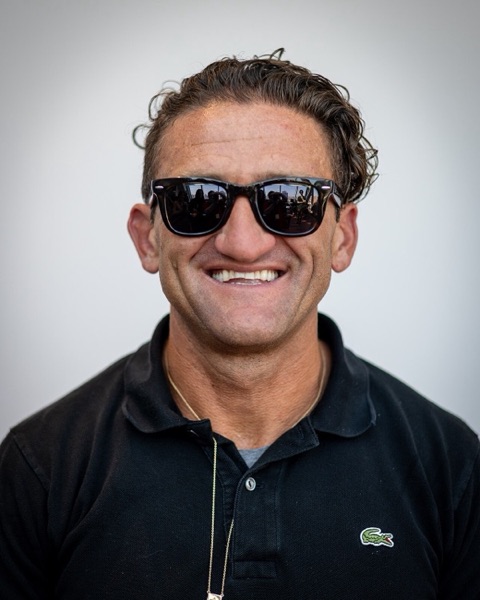
Born Casey Owen Neistat in Gales Ferry, Connecticut, in 1981, he dropped out of high school at 17 and worked as a dishwasher and short-order cook before moving to New York, according to Wikipedia. With his brother Van he made iPod’s Dirty Secret (2003), a three-minute film criticizing Apple for having no iPod battery-replacement program. Apple announced one weeks later, though it said the change had been planned for months. HBO bought the brothers’ series, The Neistat Brothers, in 2008 for just under $2 million, and it aired in 2010, the year he started his YouTube channel. He has also directed and starred in commercials for Nike, Samsung, Google, J.Crew and Mercedes-Benz, among others.
| Fact | Detail |
|---|---|
| Real name | Casey Owen Neistat |
| Born | March 25, 1981, in Gales Ferry, Connecticut |
| Platforms | YouTube, where his handle is @casey; earlier work on HBO and in branded films |
| Started on YouTube | February 2010 |
| Known for | iPod’s Dirty Secret (2003), Bike Lanes (2011), Nike’s Make It Count (2012), and a daily vlog from March 2015 to November 2016 |
| Businesses | Beme, a video app co-founded in 2015 and sold to CNN in 2016 for a reported $25 million; 368, a creator space in New York (opened 2018, closure announced 2024) |
| Audience | 12.7 million YouTube subscribers and 3.27 billion views as of July 2026, according to Wikipedia |
How did Casey Neistat get started?
“Everyone called me crazy but all I wanted to do was make YouTube videos.”
— Casey Neistat, speaking at Spikes Asia, as reported by Campaign Asia, September 2014
He was describing the years when his films had brought him television work. Campaign Asia’s account of the talk says the HBO opportunities were good for his profile but left him unfulfilled. Many creators then treated YouTube as a stepping stone to TV. He went the other way.
In Bike Lanes (2011), he got a $50 ticket for riding outside a New York bike lane, then filmed himself riding inside the lane and crashing into whatever blocked it. Time named it one of its top 10 creative videos of 2011. The next year Nike hired him for its Make It Count campaign, and he spent the budget traveling the world with his friend Max Joseph for 10 days instead. That film had more than 32 million views by October 2022, according to Wikipedia.
The lesson isn’t to quit TV. It’s that he chose the outlet where he could publish what he wanted, as often as he wanted. In 2015 he told The Drum he preferred YouTube and expected media to keep moving toward one person broadcasting straight to an audience, with no intermediary.
What does Casey Neistat say about storytelling?
“I have much less of an appreciation for what technology can bring … and much more of an appreciation for the craft of storytelling and communicating ideas and sharing messages.”
— Casey Neistat, The Tim Ferriss Show #116 (transcript via Podscripts), October 2015
Ferriss had asked about his editing software. Neistat said he uploaded every day, so there was no time for color grading or effects, and he cared far less about what software could add than about the story itself.
He has said versions of this for years. In 2014 he told Campaign Asia he prefers telling stories he knows over fiction, because the better he knows a story, the better he can tell it. His subjects bear that out: the subway, his grandmother, a dead iPod battery, a bike ticket.
For a creator, the useful version is a question to ask before you film anything: what changes between the first frame and the last? A trip, a problem, a decision, a small argument with a city agency. If you can’t name it, more equipment won’t help.
How does Casey Neistat make a video, and does gear matter?
“I only edit chronologically—start with the first frame of the video and don’t stop or review until I’ve made it to the end. … I love discovering the story by forcing it to reveal itself this way.”
— Casey Neistat, interviewed by PremiumBeat at Adobe Max, November 2020
In the same interview he said he edits in Adobe Premiere Pro, uses almost nothing but straight cuts, seldom color-corrects and rarely adds effects. He leaves the rough edges in on purpose, so viewers can tell one person made the video. He had just switched from Canon to Sony, calling the ZV-1 the perfect camera for a YouTuber.
“I reject the supposition that it’s important to understand gear and have gear. I reject it wholly.”
— Casey Neistat, on the WVFRM Podcast, as quoted by Digital Camera World, May 2025
He called himself an “anti-gear purist” in that conversation, tongue in cheek, and Digital Camera World noted that he uses a camera from 2007 that shoots only 720p video. He told Tim Ferriss in 2015 that Bike Lanes was shot on a $150 camera from Walmart and edited in iMovie, which was free.
What transfers is the editing habit, not the camera. Cutting a rough version from start to finish, before you perfect any scene, forces you to find the structure early, instead of polishing an opening before you know what the video is about.
Why did Casey Neistat start, and then stop, the daily vlog?
“Starting today, my 34th birthday, I’m going to make a movie every day, for a while anyways, or until I get bored.”
— Casey Neistat, in his first daily vlog (March 2015), as quoted by Tubefilter, July 2025
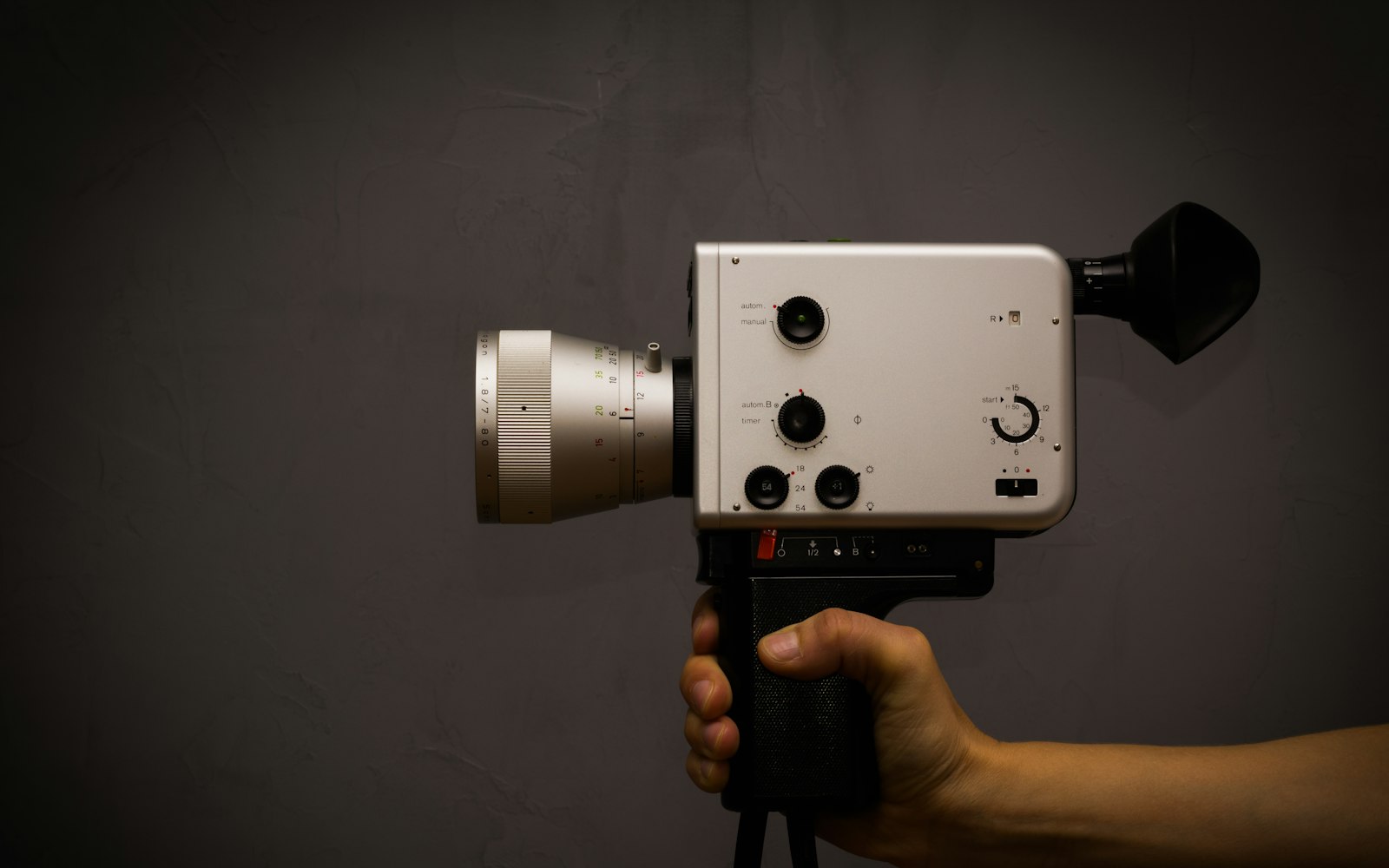
He began while he was also launching Beme, and the vlog ran for more than 500 consecutive daily uploads. His channel passed 1 million subscribers in August 2015 and 4 million a year later, and a video of him snowboarding through New York’s streets in the January 2016 blizzard drew 6.5 million views in 24 hours, according to Wikipedia. In August 2016 he took a week off, telling viewers he needed a break.
“I found a system for approaching this daily video that was no longer a challenge. And this vlog I feel like turned into the one thing I didn’t want it to be when I started.”
— Casey Neistat, in the video that ended his daily vlog, as quoted by The Drum, November 2016
He ended it in November 2016, with more than 5.8 million subscribers. Days later, after CNN’s purchase of Beme was announced, he said he had been bored, exhausted and creatively depleted for months, and that the deal let him step away, as Tubefilter reported. He came back: he revived the vlog in March 2017, and in April 2018 returned to daily vlogging to document a new studio project, 368. At Press Publish NYC in September 2025, he talked about the pull of watching numbers climb and about stepping back from YouTube to focus on his family.
Notice what he said was wrong. It wasn’t the workload, though he was exhausted. It was that the format had become easy. If you run a daily or weekly series, that’s a useful test: if you could make this week’s episode on autopilot, your viewers can probably tell. Tubefilter names Emma Chamberlain among the vloggers who followed the path he opened; compare our Emma Chamberlain interview.
What does Casey Neistat say about risk and failure?
“It was at the peak of my career that I actually pivoted to starting this tech company. And the peak of that career was one of doing branded content deals on my YouTube channel.”
— Casey Neistat, The Tim Ferriss Show #116 (transcript via Podscripts), October 2015
He told Ferriss those brand deals were worth six and seven figures, and that he shut down the production company doing them to build Beme. The idea came out of six months at the MIT Media Lab, an invitation his first instinct was to refuse because of the money he’d lose. Beme, co-founded with Matt Hackett, let people share four-second videos that couldn’t be edited or reviewed before posting.
In November 2016 CNN bought the company for a reported $25 million, closed the app in January 2017 and made Neistat executive producer of a new media brand. It didn’t last: CNN shut it down about a year after the purchase, and in January 2018 Neistat and Hackett left CNN.
“Failure sucks … But the pain that is failure does not exceed the pain that is not trying at all.”
— Casey Neistat, announcing 368, as quoted by Tubefilter, April 2018
That video launched 368, a three-floor space at 368 Broadway in Manhattan for creators to work together, which he compared to Andy Warhol’s Factory. He admitted he didn’t yet know what the business was. 368 announced its closure on Instagram in February 2024. Not every bet paid off, and he has said so in public. The useful lesson is the timing: he made his biggest bet when his existing business was strongest, not when it was failing.
What does Casey Neistat say about working with brands?
“I don’t think anyone ever wants to be sold a product it’s just not interesting, but people like to be sold ideas.”
— Casey Neistat, interviewed by The Drum, March 2015
His best-known brand films weren’t about the product. When 20th Century Fox gave him $25,000 to promote The Secret Life of Walter Mitty, he spent it delivering relief to typhoon victims in the Philippines and filmed the trip. He told Tim Ferriss the Nike detour worked because the story matched the campaign’s message about making every moment count. In 2014 he told Campaign Asia that brands looking for great ideas shouldn’t look at other advertising.
For marketers, the lesson is about control. Those films worked because a brand gave a creator real latitude, and the creator understood the brand’s idea well enough to tell it his own way. Decide early how much creative freedom you can give, then choose creators whose past work shows they can carry a message without a script. Our guide to vetting a YouTube creator before a sponsorship covers how to check, and our guide to disclosing affiliate links and sponsorships covers what the FTC expects, however loose the brief.
What does Casey Neistat say works on YouTube now?
“There’s been a lot of surrendering of the art of it, and a zeroing in on the business of it.”
— Casey Neistat, at Press Publish NYC with Colin and Samir, as recapped by The Publish Press, September 2025
According to the recap, he said he dislikes the term “creator economy” because it mixes art with commerce, and warned creators about how addictive rising numbers can be. He wasn’t pessimistic about the platform itself: he praised niche creators such as the Second World War historian Mark Felton as proof that YouTube has room for almost any voice.
“AI will get you right to where you can see the finish line, but if you stop there you’ve got something that’s mush … if your work’s average, you’re screwed. It’s over for you.”
— Casey Neistat, on the main stage at the 2024 NAB Show, as quoted by Digital Camera World, May 2024
He predicted AI would soon handle most film reshoots and chip away at influencer-marketing work, and argued that only a person can add the last 1 percent that separates great work from mush. Asked whether he used AI tools himself, he said no. Taken together, his view is consistent: average, metric-driven work is the easiest to replace, and distinctive work the hardest. That’s one reason our methodology judges creators on what they’re making now rather than on lifetime subscriber totals.
What advice does Casey Neistat give new creators?
“There are a million lanes. And if your lane doesn’t exist, just go ahead and start it.”
— Casey Neistat, at Press Publish NYC, as recapped by The Publish Press, September 2025
“I think that being true to your passion, abiding by an unspoken understanding that if YOU find it interesting that someone else will also find it interesting, that then you will ultimately find your audience.”
— Casey Neistat, interviewed by PremiumBeat, November 2020
His older advice is blunter. In 2015 he gave The Drum three tips: do the work, take chances, and do more work, because repetition is the only way to find your voice. The same year he told Tim Ferriss that the biggest waste of effort on YouTube is creators trying to copy someone else.
Together these make a practical rule: make the thing you would make anyway, then make a lot of it. Copying a successful creator’s style is the obvious shortcut, and by his account the most wasteful one.
What is Casey Neistat working on now?
He moved to Los Angeles in 2019 and announced a move back to New York in September 2022. His channel had 12.7 million subscribers and 3.27 billion views in July 2026, the latest figures on Wikipedia as of October 2026. In 2025 he joined a promotion by ModRetro, Goodyear and GameStop for the Goodyear Blimp’s 100th anniversary, a Pokémon battle on ModRetro’s Chromatic handhelds aboard the blimp with ModRetro co-founder Palmer Luckey, as the ModRetro Wikipedia entry records. In September 2025 he spoke at Press Publish NYC, quoted above.
The project still hanging over him is Under the Influence, his documentary about YouTuber David Dobrik and the controversies around him, which premiered at SXSW in March 2022 but hadn’t been released as of January 2025.
“If I had understood the totality of it, I don’t think I would have stepped my foot in the water.”
— Casey Neistat, on the JEFF FM podcast, as quoted by Distractify, January 2025
On that podcast he said part of the delay might be his own reluctance to confront the story. According to Distractify, he also said he had put so much time and money into the film that revising it didn’t seem feasible. We couldn’t find a 2026 interview we could read and verify in full, so for his latest work, check his YouTube channel directly.
What creators can learn from Casey Neistat
| Lesson | What Casey Neistat said | How to apply it |
|---|---|---|
| Story before kit | He values storytelling over what technology adds, and rejects the idea that you need to understand gear | Write one sentence on what changes between the first and last frame before you film |
| Edit to find the structure | He edits chronologically, start to finish, and lets the story emerge | Cut a rough version end to end before you polish any single scene |
| Stop when it gets easy | He ended the daily vlog once it stopped being a challenge | Review your format every few months; if it runs on autopilot, change something |
| Bet from strength | He pivoted to Beme at the peak of his brand-deal income | Take your biggest risk while your main business can absorb it |
| Sell the idea | People want to be sold ideas, not products | Pitch sponsors a story their product fits into, not a feature list |
| Make what interests you | If you find it interesting, someone else will | Choose topics you would cover even if nobody watched |
| Don’t be average | AI will make average work easy to replace | Put your effort into what only you can bring: your voice, access and judgment |
Sources
- The Tim Ferriss Show #116 transcript, Podscripts, October 2015 (official episode page)
- Casey Neistat: Don’t look to other advertising for great ideas, Campaign Asia, September 2014
- Casey Neistat spills the secret behind successful branded content, The Drum, March 2015
- YouTuber Casey Neistat bids adieu to his daily vlog, The Drum, November 2016
- CNN acquires Casey Neistat’s Beme app, Tubefilter, November 2016
- Casey Neistat on what kind of company he’s launching with CNN, Tubefilter, November 2016
- Casey Neistat announces new startup 368, Tubefilter, April 2018
- Casey Neistat on the future of creative video content, PremiumBeat, November 2020
- If your work’s average, you’re screwed, Digital Camera World, May 2024
- Where is the David Dobrik documentary?, Distractify, January 2025
- Casey Neistat on gear and the WVFRM Podcast, Digital Camera World, May 2025
- 20 years of YouTube: 2015 and Casey Neistat’s vlog, Tubefilter, July 2025
- Creativity and Chaos with Casey Neistat, The Publish Press, September 2025
- Casey Neistat, Wikipedia, revision reviewed September 2026
- ModRetro, Wikipedia, accessed October 2026
What to do next
If you’re a creator, pick one habit from this interview and try it on your next video: write down the story before you film, or cut a rough version from start to finish before polishing anything. Then compare how other creators answer the same questions: our MrBeast interview and Hank Green interview are assembled the same way, from their own public interviews.
If you’re a brand looking for creators who can carry an idea rather than read a script, start with our lists of creators, each picked on recent work rather than follower counts.
Frequently asked questions
- How did Casey Neistat get famous?
- Casey Neistat first drew international attention in 2003 with iPod’s Dirty Secret, a short film criticizing Apple’s battery policy. HBO aired The Neistat Brothers, his series with his brother Van, in 2010. YouTube films such as Bike Lanes (2011) and Nike’s Make It Count (2012) spread widely, and his daily vlog, which began in March 2015, helped take his channel past 1 million subscribers that August and over 5.8 million by November 2016.
- What does Casey Neistat say about storytelling?
- Casey Neistat says story matters more than technology. In a 2015 Tim Ferriss interview he said he cares far more about the craft of storytelling than about what software can add. He edits each video chronologically, from the first frame to the last, so the story reveals itself, and he prefers telling stories he knows well, because the better he knows a story, the better he can tell it.
- Why did Casey Neistat stop daily vlogging?
- Casey Neistat ended his daily vlog in November 2016 after more than 500 consecutive daily uploads. He said he had found a system that made the daily video no longer a challenge, and that the vlog had turned into the thing he never wanted it to be. Days later he said he had been bored, exhausted and creatively depleted for months. He revived the vlog in March 2017.
- What happened to Casey Neistat’s app Beme?
- Beme was a video app Casey Neistat co-founded with Matt Hackett. It launched in July 2015 and let people share unedited four-second clips. CNN bought the company in November 2016 for a reported $25 million, shut the app in January 2017 and made Neistat executive producer of a new media brand. CNN closed that venture about a year later, and Neistat and Hackett left in January 2018.
- What is Casey Neistat’s advice for new YouTubers?
- Casey Neistat tells new creators to make what they genuinely find interesting, because if you find it interesting, someone else will too, and you will find your audience. In 2025 he said there are a million lanes on YouTube, and if yours doesn’t exist you should start it. He warns against copying other creators, and in 2015 summed up his advice as do the work, take chances and do more work.
- What is Casey Neistat doing now?
- As of October 2026, the latest figures on Wikipedia, from July 2026, give Casey Neistat’s YouTube channel 12.7 million subscribers and 3.27 billion views. In September 2025 he spoke about creativity and metrics at Colin and Samir’s Press Publish NYC, and in 2025 he joined a ModRetro promotion aboard the Goodyear Blimp. His David Dobrik documentary, Under the Influence, premiered at SXSW in 2022 but was unreleased as of January 2025.
From the lists
Keep reading
- MrBeast Interview Highlights: His Rules for Viral YouTube VideosMrBeast’s rules for viral YouTube videos, drawn from his public interviews: clicks, retention, thumbnails, reinvesting, his team and Beast Industries.Read
- Marques Brownlee (MKBHD) Interview: How He Keeps Viewers’ TrustMarques Brownlee (MKBHD) on trust, honest reviews, brand deals, Panels and advice for new creators, drawn from his public interviews, podcasts and posts.Read
Written by Joanna Finch, editor of Topfluencers. Spot a mistake? Email corrections@topfluencers.co and we’ll fix it within 48 hours.