- Creator interviews
- YouTube
- Science education
Veritasium’s Derek Muller Interview: Misconceptions and Clickbait
Derek Muller on his PhD research into science videos, his case for clickbait titles and growing Veritasium into a team, with every quote sourced and dated.

Derek Muller says a science video only teaches when it confronts what viewers already wrongly believe. His 2008 University of Sydney PhD found that clear, polished explanations left students’ misconceptions in place, and he built Veritasium, launched in January 2011, on that finding. He also argues that a title and thumbnail are at least half the job. Since a 2023 investment from Electrify Video Partners, Veritasium has grown into a team of more than 30 people.
Derek Muller studied why science videos fail before he made any. His answer, that people learn when a video makes them face a wrong idea, explains the Veritasium format: a stranger confidently getting a question wrong, a prediction before the reveal, and a slow build to a surprising answer.
This post is for creators who want to teach on YouTube without losing the audience, for marketers weighing education channels, and for fans curious how a one-man channel became a company. It covers his research, his case for clickbait-style titles, his advice, the team, criticism of a sponsored video, and his plans as of October 2026.
Who is Derek Muller?
Derek Muller is a Canadian-Australian science communicator with a PhD in physics education research who created Veritasium, a YouTube channel about science and engineering with over 21 million subscribers as of September 2026, according to Wikipedia.
Born in Australia to South African parents, he moved to Vancouver as a toddler. After an engineering physics degree from Queen’s University in Ontario, he moved to Australia to study filmmaking and instead completed a PhD at the University of Sydney in 2008. The channel’s name joins veritas, Latin for truth, to the -ium ending of a chemical element.
| Fact | Detail |
|---|---|
| Full name | Derek Alexander Muller, born November 9, 1982, in Traralgon, Australia |
| Education | Engineering physics, Queen’s University (2004); PhD in physics education research, University of Sydney (2008) |
| Platforms | YouTube: Veritasium (since January 2011), 2veritasium (2012) and Sciencium (2017) |
| Known for | Street quizzes that expose science misconceptions, big experiments, and long investigative films such as a 2025 video on PFAS chemicals |
| TV and film | ABC’s Catalyst; the documentary Uranium – Twisting the Dragon’s Tail; Netflix’s Bill Nye Saves the World (2017); Vitamania (2018) |
| Business | Snatoms, a magnetic molecule kit launched on Kickstarter; Electrify Video Partners took a majority stake in Veritasium in 2023 |
| Awards | Eureka Prize for Science Journalism (for Uranium – Twisting the Dragon’s Tail); Streamy Award for science or education (2017); AAAS Kavli Science Journalism Gold Award (2025) |
| Audience | Over 21 million Veritasium subscribers and 4.5 billion views as of September 2026 (Wikipedia) |
How did Derek Muller get started?
“It was a real leap. I had a great job that I enjoyed, teaching physics at a tutoring company, and I gave it all up to make YouTube videos before that was a thing.”
— Derek Muller, University of Sydney, November 2024
He quit the tutoring job at the end of 2010, according to Wikipedia, and told Eton College students in 2021 that YouTube seemed “more meritocratic than the media industry”. His early trademark, Scientific American reported, was the street-corner quiz: he asked passersby simple science questions and kept probing as their confidence wobbled. In one, he asked what would happen to an extended Slinky dropped from a roof.
“It was probably in my second or third month that one of my videos went a little bit viral on Reddit and had half a million views in a week or two. I couldn’t believe it — I was over the moon — and then things settled back down and nothing happened for months and months and months.”
— Derek Muller, Creator Handbook, September 2017
He told Creator Handbook he worked more than 40 hours a week on the channel. Six months in, with one or two hits, he thought about quitting; supportive friends kept him going, and another hit came in his ninth or tenth month.
The lesson is the gap between hits. A first viral video proves little; publishing through the quiet months produced the second.
What did Derek Muller’s PhD find about science videos?
“One of the things that came out of the PhD was how important it is to think about the misconceptions people might have going in … If you don’t tap in to them, it’s easy for people to watch a video and think they’re understanding it but it’s really just reinforcing what they thought beforehand.”
— Derek Muller, University of Sydney, November 2024
A misconception is a confident, wrong idea a learner already holds. His thesis compared two videos about Newton’s laws, Scientific American reported. In one, an actor gave a polished textbook explanation that students found easy to follow; in the other, a student stumbled over the laws while a tutor set him straight. Viewers who called the polished version clear scored no better than before; viewers of the confusing one improved significantly.
THE Journal reported in 2015 that students scored about 6 out of 26 before instruction, and some said they hadn’t paid much attention to the polished video because they already knew the answer. After the dialogue version, scores roughly doubled, to almost 12. He presented the work at TEDxSydney in May 2012.
“If you perform a demonstration and don’t force the class to make a prediction … they’ll learn about as much as if they never saw the demonstration at all.”
— Derek Muller, Scientific American, May 2025
He put the principle simply to the same magazine: “Some level of discomfort seems to be essential … That’s when learning can really take place.”

For creators, the finding is practical: before you explain anything, say what most viewers think is true, ask them to predict, and only then show the answer. A video that feels clear isn’t the same as one that changes a mind.
How does Derek Muller decide what to make next?
“In the early days a lot of topics came from things that I knew people found hard to understand, because as a teacher, I knew they were common misconceptions. Sometimes I make videos based on a book I’d read or a conversation I had with a friend, some videos came out of comments on other YouTube videos — from the audience.”
— Derek Muller, Creator Handbook, September 2017
His first plan failed. He told Eton College students in 2021 that he meant to climb from basics to PhD-level ideas over several years, but beginners didn’t want to watch and experts found it useless, so he switched to higher-level topics that are commonly misunderstood.
Today the pitching is shared. Casper Mebius, who joined as an intern in 2023 and now writes and directs episodes, told Scientific American that Muller listens patiently through pitches, then makes one well-aimed comment. The team’s test, the magazine reported, is whether a story will change how viewers see the world.
Muller described the channel’s purpose in the same article:
“That is the unvarnished truth of the channel: it’s trying to promote the increase of rationality and critical thinking.”
— Derek Muller, Scientific American, May 2025
A useful filter for your own ideas: look for topics where your audience is confidently wrong.
Why does Derek Muller defend clickbait?
“I always thought my job was to make great videos. And then a title and thumbnail that adequately represented what the video was about. But now I’ve realized that making the title and thumbnail is at least half the job.”
— Derek Muller, in his August 2021 Veritasium video on clickbait, as quoted by Better Posters, September 2021
He framed it as a paradox: “People almost universally claim to hate it, but you also see it everywhere … So, why is clickbait everywhere? Well, because it works.”
His defense rests on a definition. Clickbait, in his first sense, is content built to attract attention and get a click, and he saw nothing wrong with it: “if you didn’t try to attract attention and get people to click on your links, then you wouldn’t really be doing your job”. The second sense is a headline that wins a click for something of dubious value. He called them “legitbait” and “clicktraps”, and compared title testing to natural selection: try variations, keep what performs.
The rule to borrow: make the title as intriguing as the video can honestly support. Our guide to how the YouTube algorithm works explains why click-through and watch time both count.
What does Derek Muller say works on YouTube now?
“YouTube has algorithmically pushed us toward longer videos. So in the early days, the videos were three minutes, two, three minutes and now they’re 30. And why? Because if we make a good thirty minute video, it gets shown a lot more. And that’s just the name of the game.”
— Derek Muller, in the Q&A after his public lecture What Everyone Gets Wrong About AI and Learning, transcript by The Singju Post, April 2025
Scientific American traced the shift to YouTube’s 2012 decision to reward watch time over clicks. Length changes how a video is ordered:
“What do you put in the first minute? That’s pretty essential. You don’t want to start with crazy math.”
— Derek Muller, in the same lecture Q&A, transcript by The Singju Post, April 2025
If a writer wants a full derivation at minute 25, he said, he agrees, because the people still watching want it. On a broadcaster such as the CBC or Australia’s ABC, he added in another answer, he could never go into that depth.
The structure that follows: an accessible first minute, then the hardest material late, for viewers who chose to stay. Mark Rober makes a similar case for long, story-driven science videos in our Mark Rober interview.
What mistakes does Derek Muller say he made early on?
“I look back at those (early) videos now and I cringe at a lot of them, because I wasn’t that good … it’s probably good that I didn’t get too big of an audience too early because I had time to experiment and change what I was doing, really develop my process and make better videos.”
— Derek Muller, Creator Handbook, September 2017
The bigger problem, by his own account, was doing everything himself for too long. In the same 2017 interview he said about 98 percent of the work had been his, and called building a team one of his biggest challenges. In a December 2025 video, Tubefilter reported, he said he had kept costs to the bone because ad revenue felt fickle, doing even the animations himself. The cost showed up at home:
“There were many nights where, instead of tucking my kids into bed, I was downstairs in the office making videos for this channel.”
— Derek Muller, in the Veritasium video The Future of Veritasium, as quoted by Tubefilter, January 2026
If you’re the bottleneck in your own channel, decide which jobs you’ll hand off first, before it becomes urgent.
What advice does Derek Muller give new creators?
“You have to be in it to win it. You gotta get yourself in the game. It’s so simple, but it’s tough advice to follow, to get in it and stay in it, just get in there and start experimenting — it doesn’t matter if it’s bad to start with, everyone’s bad. The key is to keep going even though you are bad.”
— Derek Muller, Creator Handbook, September 2017
He told Creator Handbook that most people’s problem is the inability to get started: they keep asking for advice instead of making something. He also played down gear, saying he could probably shoot on an iPhone.
“Focus on the process, focus on making the next video better than the last one; that’s what I kept telling myself rather than just looking at the outcome and maybe becoming disappointed.”
— Derek Muller, Creator Handbook, September 2017
His career-change tips, published by the University of Sydney in 2024, point the same way: listen to your gut, try lots of things and double down where you get positive feedback, and keep learning. Judge each video against your last one, not the view count.
How did Derek Muller grow Veritasium into a team?
“I got into YouTube because I love making videos, learning about science and teaching others. But over the last twelve years the channel has grown so much that there is a lot more to the business these days. I’m excited to partner with Electrify so I can hand off a lot of those things and focus on my core passion of making great videos.”
— Derek Muller, in Electrify’s announcement of its investment, April 2023
Electrify Video Partners invests in education and entertainment channels and runs their business side. Muller signed in April 2023, when Veritasium had over 13 million subscribers. Electrify called it a majority investment; Muller kept an ownership interest, and the price wasn’t disclosed. In December 2025 he described the terms:
“The deal they offered was this: Electrify would buy some of the business, but I would remain an owner. They would take care of things like hiring, production, logistics, corporate compliance, taxes, all that sort of stuff, and they would reduce my working hours … It was kind of the perfect offer at the perfect time.”
— Derek Muller, in the Veritasium video The Future of Veritasium, as quoted by Tubefilter, January 2026
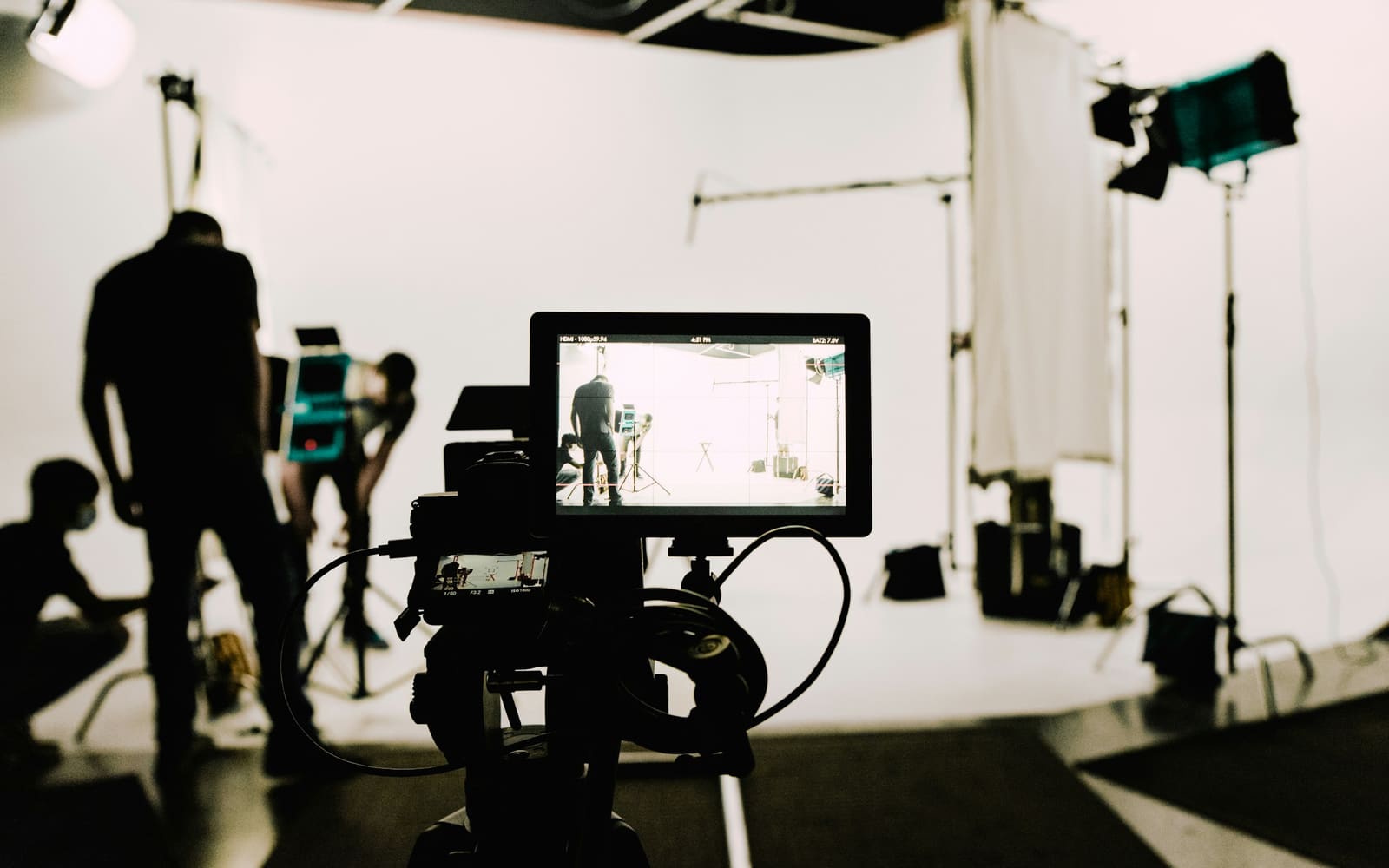
Scientific American counted nearly 20 people on the team in 2025; by December, Muller said more than 30 worked on Veritasium, from writer-directors and researchers to animators and editors. Production costs had quadrupled, mostly spent on the team, Tubefilter reported. Since the deal, the channel has made its three most-watched videos and grown its subscribers by 50%, and Tubefilter reported it has no plans to use generative AI or swap long videos for Shorts.
Selling part of a channel is one route to a team; Hank Green took a different one with his studio, Complexly, as our Hank Green interview explains.
How does Veritasium work with sponsors?
Veritasium videos often carry sponsor segments: in one October 2024 week, Tubefilter ranked two of them, sponsored by Saily and Incogni, among YouTube’s five most-watched branded videos.
One whole-video sponsorship drew public criticism. In July 2021 Veritasium published Why You Should Want Driverless Cars On Roads Now; the video’s page on Veritasium’s website says Waymo sponsored the video and provided access to its technology and staff. That October, the YouTuber Tom Nicholas published a video essay, Veritasium: A Story of YouTube Propaganda, which used the deal as a case study in how far a sponsorship can compromise a creator’s editorial content. The sources we used don’t record a response from Muller, so this post doesn’t describe one.
For creators, the episode shows that when a sponsor’s product is the subject of a video, viewers may question the content as well as the disclosure. Marques Brownlee’s approach is to keep brand deals out of the categories he reviews, as our Marques Brownlee interview covers; our guide to disclosing affiliate links and sponsorships sets out the rules, and brands can check past integrations with our guide to vetting a YouTube creator.
What is Derek Muller working on now?
“I have been able to reduce my workload and spend more time with my now four kids … What I can tell you is that I won’t be around as much, which you’ve probably already gathered over the last year or two. In some upcoming videos, I will not appear at all, even if I’m guiding things in the background.”
— Derek Muller, in the Veritasium video The Future of Veritasium, as quoted by Tubefilter, January 2026
He described it as stepping back rather than retiring; he said he will retire at some point, but not when. He married the planetary scientist Raquel Nuno in November 2025, according to Wikipedia, and Scientific American reported in 2025 that the family was living in Lisbon.
One recent project shows the direction. How One Company Secretly Poisoned The Planet, a nearly hour-long 2025 film about PFAS, the so-called forever chemicals, drew almost three million views within a day and ends with Muller testing his own blood. It won a 2025 AAAS Kavli Science Journalism Gold Award, with Muller and Zoe Heron as executive producers and Gregor Čavlović as producer, director and co-writer.
On September 30, 2026, Electrify launched InGenius, a channel developed by people from the Veritasium and Electrify teams for stories about economics, geopolitics and social science. Its announcement doesn’t describe a role for Muller.
What creators can learn from Derek Muller
| Lesson | What Derek Muller said | How to apply it |
|---|---|---|
| Start from the wrong idea | Videos that don’t engage misconceptions just reinforce what viewers already thought (2024) | Open with the answer most viewers would give, then test it |
| Make viewers predict | A demonstration without a prediction teaches almost nothing (2025) | Pause before every reveal and ask the audience to guess |
| Packaging is half the job | Title and thumbnail are at least half the work (2021) | Write titles before scripts, and test several |
| Earn the click honestly | Attracting clicks is part of the job; he aims for “legitbait”, not “clicktraps” (2021) | Check that every title promise is paid off in the video |
| Front-load accessibility | The first minute is essential, so no crazy math up front (2025) | Save the hardest material for viewers who have chosen to stay |
| Get in and stay in | Everyone is bad at first; keep going (2017) | Publish on a schedule and judge each video against the last |
| Hire before you burn out | Doing 98 percent of the work himself made hiring a team one of his biggest challenges (2017) | List the jobs you’d hand off first and price them now |
Sources
- Helll-ooo! Watching Videos Does Not Necessarily Lead to Learning, THE Journal, May 2015
- Inside Veritasium: An Interview with Dr. Derek Muller, Creator Handbook, September 2017
- A Fireside Chat With YouTube Host Of Veritasium, Eton College, June 2021
- Why You Should Want Driverless Cars On Roads Now (video page), Veritasium, July 2021
- We Need To Talk About Clickbait (video page), Veritasium, August 2021
- YouTube data has lessons for poster creators, or: Too legit to click, Better Posters, September 2021
- Veritasium: A Story of YouTube Propaganda (video and description), Tom Nicholas on YouTube, October 2021
- Electrify completes majority investment in Veritasium, Electrify Video Partners, April 2023
- Creator funding firm Electrify invests in education YouTube channel Veritasium, Tubefilter, May 2023
- Top 5 Branded Videos of the Week: Codes, celebrity tech, really cool eels, Tubefilter, October 2024
- An element of truth, University of Sydney, November 2024
- Transcript of Veritasium: What Everyone Gets Wrong About AI and Learning, The Singju Post, April 2025
- YouTube Science Star Derek Muller Confronts PFAS “Forever Chemicals”—In His Own Blood, Scientific American, May 2025
- 2025 - Video In-Depth Reporting - Gold Award, AAAS Kavli Science Journalism Awards, 2025
- For almost a decade, Veritasium was a one-man show. Then it got an investment., Tubefilter, January 2026
- Introducing InGenius, a New Channel from the Team Behind Veritasium, Electrify Video Partners, September 2026
- About, Veritasium, October 2026
- Derek Muller, Wikipedia, October 2026
What to do next
If Derek Muller’s test, whether a video changes what a viewer believes, changes how you judge creators, look at what their videos teach, not just subscriber counts. Our methodology explains how we check creators.
For other creators’ answers to the same questions, browse our creator interviews, starting with fellow science communicators Mark Rober and Hank Green, or our Cleo Abram interview for a science and tech channel built on optimism.
Frequently asked questions
- How did Derek Muller get famous?
- Derek Muller launched the YouTube channel Veritasium in January 2011, after quitting a job teaching physics at a tutoring company. His early videos quizzed people on the street about science to expose common misconceptions, and videos about a falling Slinky were among his first successes. Veritasium passed one million subscribers in 2013 and 10 million by 2021, and had over 21 million as of September 2026, according to Wikipedia.
- What did Derek Muller’s PhD find about science videos?
- Derek Muller’s 2008 University of Sydney PhD, Designing Effective Multimedia for Physics Education, found that polished, easy-to-follow physics videos taught students little, because viewers kept the wrong ideas they started with. A video in which a student worked through misconceptions with a tutor felt more confusing but produced much bigger gains; THE Journal reported scores roughly doubling. He built Veritasium on that finding, opening videos with what viewers wrongly believe.
- What is Derek Muller’s advice for new YouTubers?
- In a 2017 Creator Handbook interview, Derek Muller said most people struggle simply to get started, and that the key is to start making videos and keep going even while they are bad. He advised focusing on making each video better than the last rather than on view counts, and said gear matters less than content. In an August 2021 video on clickbait, he said a title and thumbnail are at least half the job.
- What brands has Derek Muller worked with?
- Veritasium videos regularly carry sponsor segments. Waymo sponsored a July 2021 Veritasium video about driverless cars; in October 2021 the YouTuber Tom Nicholas published a video essay criticizing it, using the deal as a case study in how far sponsorship can compromise editorial content. In October 2024, Tubefilter ranked Veritasium videos sponsored by Saily and Incogni among that week’s most-watched branded videos on YouTube. Since 2023, Electrify Video Partners, which holds a majority stake, has handled much of the channel’s business side.
- What is Derek Muller doing in 2026?
- In a December 2025 video, Derek Muller said he was stepping back from appearing in Veritasium videos, though not retiring: he would appear less, and not at all in some videos, to spend more time with his four children. By then more than 30 people worked on the channel. He married Raquel Nuno in November 2025. In September 2026, Electrify launched InGenius, a channel developed by people from the Veritasium and Electrify teams.
- Who owns Veritasium?
- Electrify Video Partners, a company that invests in YouTube channels, holds a majority stake in Veritasium after a deal Derek Muller signed in April 2023. Muller kept an ownership interest and became an Electrify shareholder, and the price wasn’t disclosed. He has said Electrify took over hiring, production, logistics, compliance and taxes so he could work fewer hours. Since the deal, Veritasium has grown its subscribers by 50%, Tubefilter reported in January 2026.
From the lists
- YouTube · AI tools
AI Tool Reviewers on YouTube Worth Following in 2026
21 YouTube creators who test AI tools on camera, show the real output and say when something doesn’t work. Each entry says why, with a video to start with.
21 creators · Reviewed
Read the list - YouTube · Shopify and ecommerce
Shopify Creators Who Teach Running a Real Store
21 creators who teach Shopify from the operator’s side: store setup, ads with real numbers, discounts, wholesale and theme code. No get-rich-quick pitches.
21 creators · Reviewed
Read the list
Keep reading
- Markiplier Interview Highlights: From Horror Let’s Plays to Iron LungMarkiplier on horror Let’s Plays, his audience, burnout, brands and self-releasing Iron Lung, from his public interviews, with every quote sourced and dated.Read
- Jacksepticeye Interview Highlights: Burnout, Breaks and BloodborneJacksepticeye on his start, two uploads a day, burnout and breaks, Thankmas, his coffee brand and Bloodborne, in his own sourced and dated quotes.Read
- Doctor Mike Interview Highlights: Making Medicine EntertainingDoctor Mike on edutainment, fighting health misinformation, the sponsors he turns down, boxing and charity, from his interviews, each quote sourced and dated.Read
- NikkieTutorials Interview: The Power of Makeup, Eurovision and NimyaNikkie de Jager on The Power of Makeup, coming out, Eurovision, her self-funded brand Nimya and Glow Up, from her public interviews, every quote dated.Read
Written by Joanna Finch, editor of Topfluencers. Spot a mistake? Email corrections@topfluencers.co and we’ll fix it within 48 hours.